FM Synthesis: Shaping the Sound of the ’80s and ’90s
Hey sound enthusiasts, synth nerds and retro gamers out there! Buckle up because today we’re time travelling back to the ’80s and ’90s, diving into the world of FM synthesis and the legendary YAMAHA chips that defined an era of music and gaming.
A Bit of History
In the early ’60s, a guy named John Chowning was hanging around Stanford University, delving into the depths of sound and technology. He ended up stumbling upon FM synthesis, an incredible method of creating unique sounds that were previously unheard of.
Chowning’s work was pretty groundbreaking. The guy figured out how to create a universe of sounds using this technique, ultimately leading to the patent of FM Synthesis by Stanford. Then, along came Yamaha. They saw the potential in FM synthesis and licensed the patent, paving the way for a new generation of iconic synthesizers.
The Legendary Yamaha Chips
Fast forward a few years and we’re smack dab in the middle of the ’80s and ’90s, an era dominated by the distinct sound of Yamaha’s FM synthesis in music, gaming, and beyond.
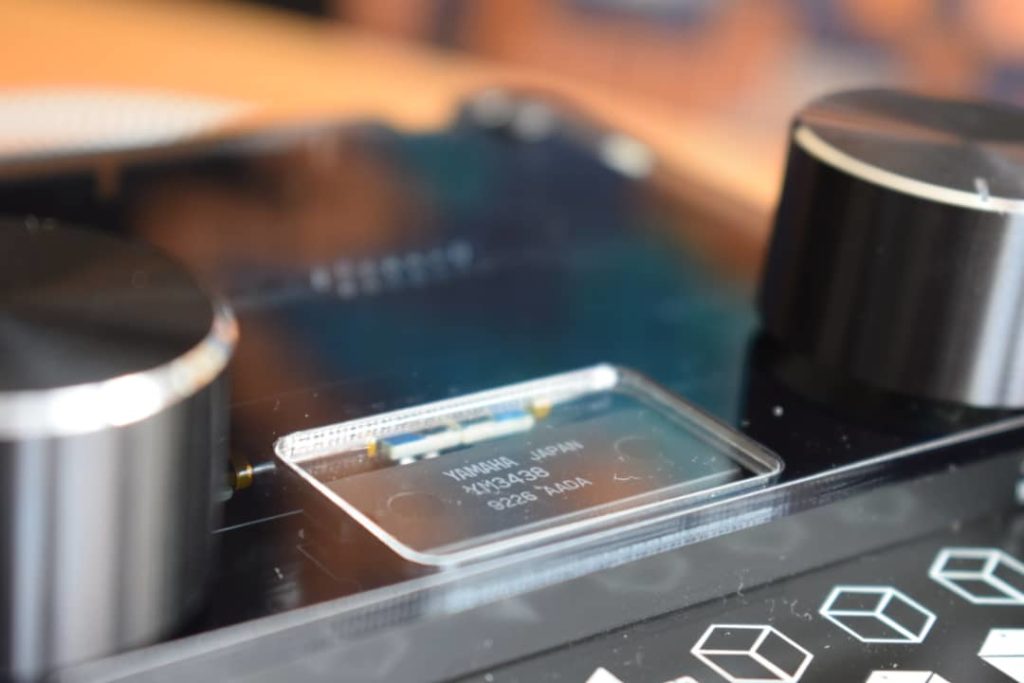
Then there’s the DAFM Synth – GENESIS YM2612 / YM3438. This synth is all about the nostalgia of the Sega Genesis era, using the YM2612 or YM3438 chip. Sonic the Hedgehog’s catchy tunes? All thanks to these chips (and to the Japanese composers who defined the Genesis sound). The YM2612 is known for its «ladder effect», a sort of crossover distortion that gives it its characteristic sound. Meanwhile, the YM3438 gives a cleaner, louder output, perfect for FM-synthesis purists.
Let’s not forget the DAFM Synth – BLASTER YMF262 (OPL3). This synth uses the YMF262 chip (also known as OPL3), which featured in many sound cards, including the iconic Sound Blaster Pro 2 and Sound Blaster 16 ASP. If you’re a Doom or Descent fan, you’ve got the YMF262 to thank for those immersive soundscapes.
🎛️ Three chips, three handmade synths. Every DAFM synth is built in Santander, Spain, around a genuine Yamaha chip: the ARCADE (YM2151) for coin-op sounds, the GENESIS (YM2612 or YM3438) for the Mega Drive sound, and the BLASTER (YMF262 / OPL3) for 90s PC soundtracks. Each one is also available as a DIY kit on Tindie, and at Perfect Circuit (Genesis, Arcade, Blaster).
FM Synthesis FAQ
What is FM synthesis? In frequency modulation (FM) synthesis, one oscillator (the modulator) changes the frequency of another (the carrier). When that modulation happens at audio rates, it stops sounding like vibrato and creates new harmonics, so a couple of simple sine waves can turn into bells, basses, brass or electric pianos. Yamaha calls these oscillators operators, and the way they are connected is called an algorithm.
Who invented FM synthesis, and when did Yamaha get involved? John Chowning discovered the FM synthesis technique at Stanford University in 1967 and published it in 1973. Stanford licensed the patent to Yamaha in the 1970s. Yamaha’s first FM instrument, the GS1, shipped in 1981, and the much more affordable DX7 arrived in 1983 and took FM to the mainstream (sources: Stanford CCRMA, Yamaha).
What is the difference between the YM2151, the YM2612 and the YMF262? They are all Yamaha FM chips, built for different machines:
YM2151 (OPM): eight channels with four operators each and eight algorithms. It powered countless arcade machines and pairs with the YM3012 DAC.
YM2612 (OPN2): six channels with four operators each and eight algorithms. It is the FM heart of the Sega Genesis / Mega Drive. The YM3438 is its cleaner, louder CMOS version without the ladder effect.
YMF262 (OPL3): the Sound Blaster Pro 2 and Sound Blaster 16 chip. It offers up to 18 two-operator channels, or a four-operator mode with fewer channels, plus extra operator waveforms. It pairs with the YAC512 DAC.
Which DAFM synth should I choose? Follow your memories. Coin-op classics like Street Fighter II or OutRun point to the ARCADE, Sonic and Streets of Rage to the GENESIS, and Doom or Dune to the BLASTER. If you go for the GENESIS, our guide YM2612 vs YM3438: The Ladder Effect Explained will help you pick the chip. Still unsure? Our AI assistant can compare the models for you.
Can I use sounds from my computer on the hardware? Yes. The GENESIS and ARCADE save and load presets on an SD card as DMP files, the format used by the DefleMask tracker. The BLASTER uses OPLI files that open in instrument editors like the OPL3 Bank Editor. For Genesis sounds, our open-source DAFMExplorer lets you browse 93,000+ presets and download them as DMP files.
Why Do We Love Them?
Apart from their nostalgic value, these synths are the perfect fusion of retro gaming and musical experimentation. Each chip has its unique quirks and sound qualities, allowing for a wide range of FM sounds.
So, whether you’re a synth geek, a retro gamer, or a music maker who wants to dive into the world of FM synthesis, there’s a DAFM synth for you. Each one provides a glimpse into the revolutionary sound design of the past, offering a hands-on experience to create, tweak, and enjoy the iconic sounds that shaped a generation.
Go on, get your hands on these synths, and start creating your unique soundscapes!
Este sitio web utiliza cookies propias y de terceros para el correcto funcionamiento, análisis de la navegación y visualización por parte del usuario. Si continúa navegando, entenderemos que acepta su uso.
Se recomienda al usuario que lea atentamente esta Política de Cookies para informarse sobre el uso responsable que la página web hace de ellas y sobre las opciones que el usuario tiene para configurar su navegador y gestionarlas. Leer política de cookies
Cookies necesarias
Las cookies necesarias son absolutamente esenciales para que el sitio web funcione correctamente. Esta categoría solo incluye cookies que garantizan funcionalidades básicas y características de seguridad del sitio web. Estas cookies no almacenan ninguna información personal.
Las cookies necesarias que se utilizan en esta web son:
_PHPSESSID: Esta Cookie es usada por el lenguaje de encriptado PHP para permitir que las variables de sesión sean guardadas en el servidor web. Esta cookie es esencial para el funcionamiento del sitio web.
cmoove_gdpr_popup: Cookie técnica y necesaria que contiene el valor de si se ha aceptado la política de cookies.
mfn-builder: Esta cookie técnica y necesaria es usada por el tema de la web para cargar los contenidos de manera estructurada.
Si desactivas estas cookies no podremos guardar tus preferencias. Esto significa que cada vez que visites esta web tendrás que activar o desactivar las cookies de nuevo.
Cookies no necesarias
Cualquier cookie que no sea particularmente necesaria para que el sitio web funcione y se use específicamente para recopilar datos personales del usuario a través de análisis, anuncios y otros contenidos integrados se denominan cookies no necesarias. Es obligatorio obtener el consentimiento del usuario antes de ejecutar estas cookies en su sitio web.
Las cookies no necesarias que se utilizan en esta web son:
_ga: se utiliza para distinguir los usuarios que acceden al sitio web.
_ga_*: se utiliza para generar datos estadísticos acerca de cómo utiliza el usuario el sitio web.
¡Por favor, activa primero las cookies estrictamente necesarias para que podamos guardar tus preferencias!