
The DAFM Blaster is an OPL3 synth built around a real Yamaha YMF262 (OPL3) FM chip, the chip used in many 90s PC sound cards, including the popular Sound Blaster Pro 2 and the Sound Blaster 16 ASP. It is hardware FM, not a software emulation: you play the genuine chip through MIDI, with a separate YAC512 stereo DAC for a louder and cleaner output. Handmade by Kasser Synths in Santander, Spain, it comes as an assembled portable synth or as a through-hole DIY kit.
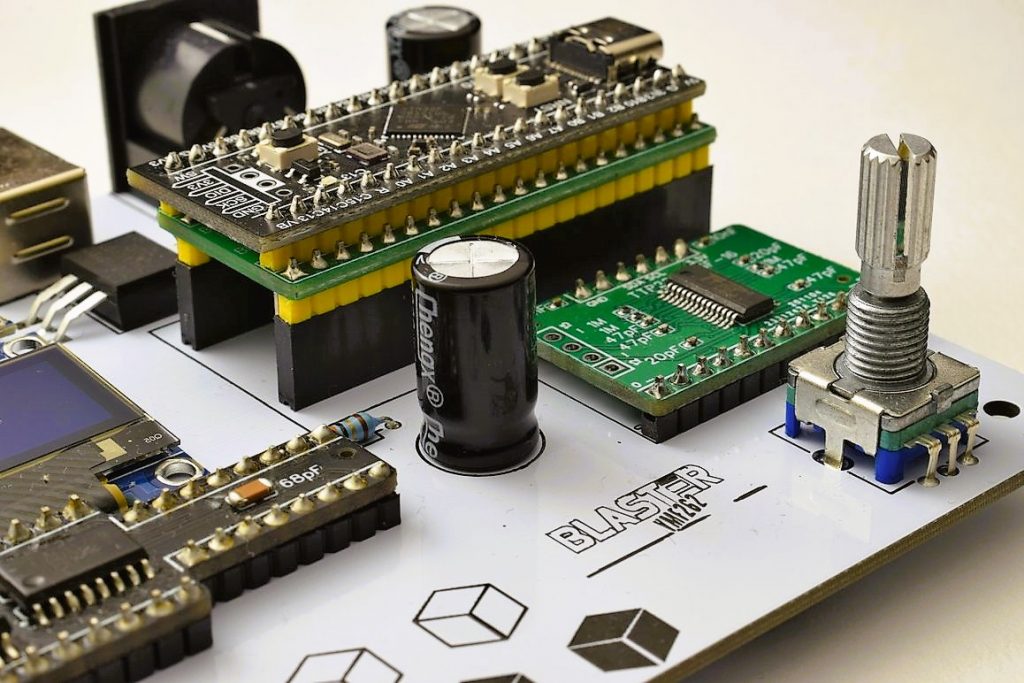
Why a real OPL3 synth?
Frequency Modulation (FM) synthesis defined the sound of a whole musical generation during the 80s and 90s, and on the PC that sound came from the OPL3. Every DAFM puts a genuine vintage Yamaha FM chip on the board, so every patch you hear comes from the real hardware. To learn the chip’s story, read The Yamaha YMF262: Crafting the Soundscape of 90s PC Gaming.
The sound of 90s PC games, built in
Bank 0 includes the 128 General MIDI 4-operator instruments designed by The Fat Man and used in 90s PC games like Doom, Descent, Tyrian, The Lost Vikings, Heretic, Hexen, Ultima Underworld, Day of the Tentacle, Dune, Wing Commander, Another World, Syndicate, Lemmings and Indiana Jones and the Fate of Atlantis. Bank 1 loads up to 128 of your own presets from the SD card.
OPL3 synth features
- Real Yamaha YMF262 (OPL3): 6 channels, 4 operators per channel, 4 algorithms
- Separate YAC512 stereo DAC for a louder and cleaner sound
- ADSR envelopes, frequencies and LFOs editable to cover the whole range of FM sounds
- Bank 0 with 128 General MIDI 4-operator instruments from 90s PC games
- Bank 1 loads up to 128 presets from the SD card
- Every preset parameter of the YMF262 controllable through MIDI CC
- 2 rotary encoders and a full menu on 4 blue OLED displays
- 12-note tactile keyboard with octave change to audition patches
- Save presets to RAM or to SD card as OPLI files that open in instrument editors like the OPL3 Bank Editor
- Stereo 3.5 mm audio output · MIDI input · USB Type B power (5V)
The separate YAC512 DAC
The YMF262 sends its audio digitally to its companion YAC512 stereo DAC, which converts the signal into clear and clean analog sound. Having that separate DAC is why the DAFM Blaster gives a louder and cleaner output.
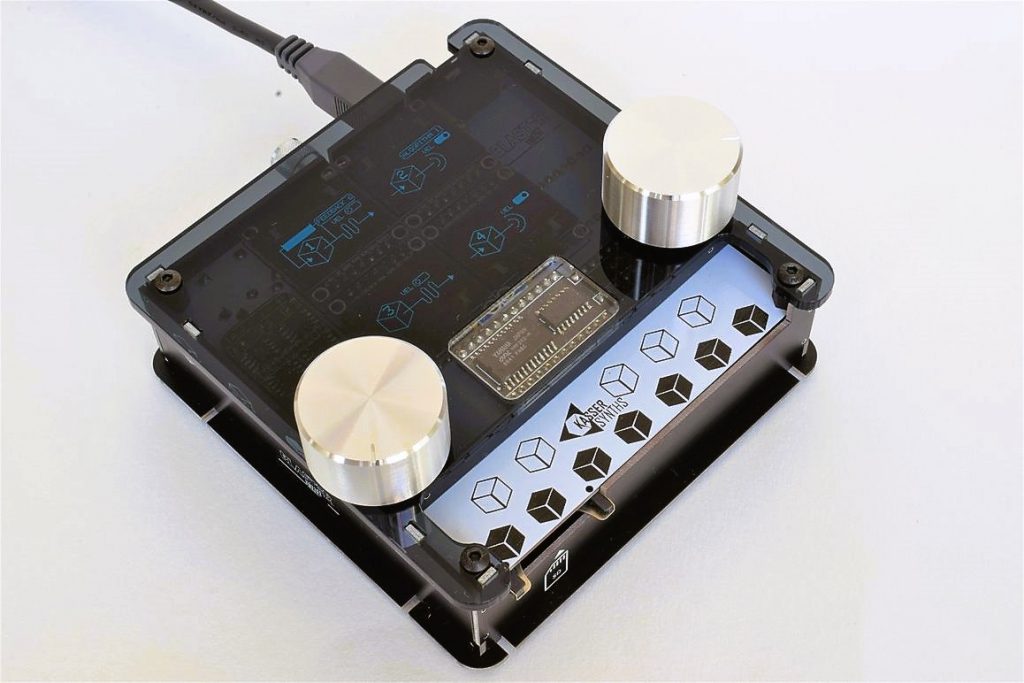
Assembled synth or DIY kit
- Assembled portable synth: compact form factor with case and knobs, ready to plug into your setup
- DIY kit: a through-hole soldering project with build instructions on Hackaday. The kit always includes the YMF262 chip, so you never have to source it yourself. Not sure about your soldering? Choose the assembly option in the Tindie order menu
Shipping worldwide and to Japan
We ship from Spain with tracked Correos shipping. Shipping to Japan costs USD 24.99. Import duties or taxes, if any, are paid by the buyer. Japanese buyers can find more details on our Japan page. To compare the Blaster with the Genesis and Arcade models, see all DAFM products.
Learn more
- The Yamaha YMF262: Crafting the Soundscape of 90s PC Gaming
- FM Synthesis: Shaping the Sound of the 80s and 90s
- DAFM Arcade: the YM2151 arcade FM synth
- DAFM manuals, firmware and guides
FAQ
Is the DAFM Blaster a real OPL3 synth or an emulation?
It uses a genuine Yamaha YMF262 (OPL3) chip on the board, paired with a YAC512 DAC. No software emulation.
Does the DIY kit include the YMF262 chip?
Yes. All DAFM kits always include the chip.
Can I control it from a DAW or keyboard?
Yes. It has a MIDI input for a keyboard, sequencer or any MIDI instrument, and the preset parameters can be controlled with MIDI CC. The MIDI CC chart is in the datasheet on Tindie.
Can I load my own sounds?
Yes. Bank 1 holds up to 128 presets loaded from the SD card as OPLI files, which you can also open in the OPL3 Bank Editor.
Who pays import duties?
Import duties or taxes, if any, are paid by the buyer.
Are the chips new?
The vintage chips may have been resurfaced at origin. We test every chip so it works perfectly in the synth.